October 22nd, 2026
Before the supermarket, there was the local market From barter to the market, to the culture of thrifting and genuine food, what has changed over time?
Sunday is shopping day, whether you live alone or with a family. Supermarkets on weekdays brace themselves to welcome hordes of people every week — a particular habit reinforced by everyone's work schedules that has, by now, become a global tradition. Some people, precisely to avoid the crowds, prefer to shop from home, while others rely on services that promise to deliver zero-kilometre products directly to their door, on a monthly or weekly basis.
After decades in which the supermarket represented the most advanced model for grocery shopping — the so-called gold standard — the way we look at food and its origins has changed. Growing attention to food quality and supply chain sustainability is bringing the direct relationship with producers back to centre stage. We're not talking about a total abandonment of large-scale retail, but certainly a closer eye from younger generations toward alternatives capable of meeting a desire for greater awareness.
Farmers' markets and neighbourhood markets are trending again, working their way into the habits of those who seek fresh produce and want to know the origin of what they put on the table — preferring, where possible, to support local economies. And the numbers seem to confirm this interest: according to a Coldiretti/Noto Sondaggi survey released in June 2025, 65% of Italians had shopped at a farmers' market at least once during the year. A figure that, while not alone proving a widespread return to neighbourhood markets, speaks to how direct sales continue to play a role in the relationship between consumers and food. As often happens throughout history, greater available technology brings about a reversal of habits and a return to the analogue.
The country mouse and the city mouse
@elizabeth_minchilli Lunch at the Market in Rome with my friend @Evan Kleiman . #foodtour #restaurant #rome #market original sound - Elizabeth Minchilli
How did we get here? Let's take a leap back a few centuries — to a time when the very idea of a supermarket didn't exist, and finding food meant knowing someone who produced it. We're talking about long before neatly organised shelves sorted by category and buy-one-get-one-free deals. These were the days of barter: I have something you need, you have something I need. The famous do ut des, before it ever became such a popular marketing strategy.
The rise of cities led the countryside to supply urban centres, bringing fruit, vegetables and other local produce to the places where the population was concentrated. Town squares became meeting points between two almost fairy-tale worlds — like in the fable of the country mouse and the city mouse: the rural one, who counted harvests and seasons, and the urban one, who worried about daily needs and the people who would later buy those goods. The market was a place for exchanging goods, but above all information — before the digital age.
Barter then slowly gave way to buying and selling, and trade organised itself into increasingly structured forms, but the underlying principle remained much the same: someone produces, someone sells, someone else comes to buy, and word of mouth spreads. Everything else has changed — from distribution methods to the speed at which we can obtain anything. Today, among the many evolutions of commerce, the market continues to preserve something very ancient: the direct, intimate relationship that forms between seller and buyer.
Happiness is only real when shared
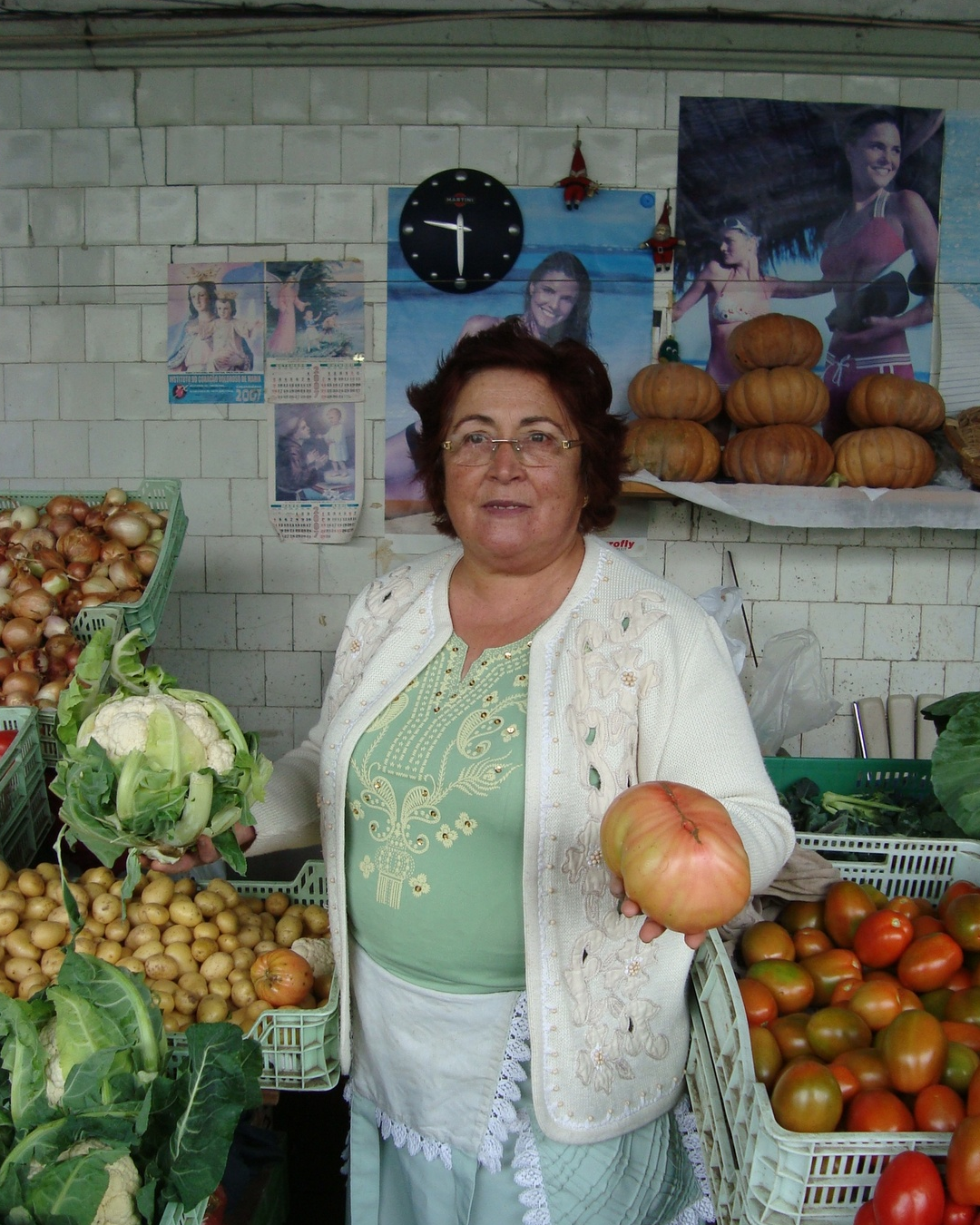
Abroad, Italy has a reputation for being traditionalist, and sometimes we're even criticised for not modernising enough to keep up with the times. But, in the end, what is progress without tradition? Italian neighbourhood markets are today a cultural moment with an old-world aesthetic that is very often emulated and reimagined in fashion editorials or international films. Over the years they have retained the same nostalgic character and the same sense of cohesion. It was never just about stocking up on supplies — we like to return to places where we felt good: to the greengrocer who tells us about his tomatoes, or the butcher who talks us through his cuts of meat. Every self-respecting Italian neighbourhood jealously guards its local market, and younger generations are helping to keep it alive. How many times have you made plans with friends to browse the market on Viale Papiniano in Milan? Even in Italy's largest cities — and beyond — it remains a fundamental part of urban life. The rise of contemporary thrifting culture among the youngest generations has helped the market never go out of fashion, cementing it as a place to buy and sell not just food, but also vintage and second-hand clothing.
Beyond awareness and beyond the return to the analogue, there is the human dimension of the neighbourhood market, which ultimately we continue to love precisely because it brings us into contact with one another. When everyday life is disrupted, we realise the value of these places. Logistical difficulties and transport disruptions that can slow the movement of goods highlight just how much our idea of normality depends on systems we take for granted. It only takes one thing to go wrong to understand how important it is to be able to rely on a network of people — and services — close to us. Because in the end, if everything fell apart — in a world that satisfies needs at the speed of a click — all we have left is the land we cultivate.